If you own a rental in Oshawa — a student house near the university, a converted duplex, an investment property you lease out — insulation is one of the few upgrades that works for you on multiple fronts at once: it cuts operating cost, it keeps tenants longer, and it quiets the complaints.
But the economics are different from a home you live in yourself, and spray foam pays off in specific places. Here’s the investor’s version.
Why insulation is a landlord’s upgrade, not just a comfort upgrade
For an owner-occupier, insulation buys comfort. For a landlord, it does something more measurable:
It lowers operating cost — for whoever pays the utilities. If heat is included in the rent, poor insulation comes straight out of your margin every winter. If the tenant pays, a cold, expensive unit is harder to rent, harder to hold a tenant in, and a magnet for complaints.
It reduces tenant turnover. A comfortable unit keeps tenants. Turnover is expensive — vacancy, cleaning, re-listing, wear. A drafty, cold, or noisy unit turns over faster. Insulation is cheap next to a month of vacancy.
It cuts complaints and disputes. “The unit is freezing” and “I can hear everything upstairs” are two of the most common tenant complaints, and both trace to insulation and air sealing. Fixing them removes friction from the whole relationship.
It protects the asset. Proper insulation and air sealing reduce moisture problems — condensation, mould, the kind of hidden damage that turns into an expensive repair between tenants.
So the calculation isn’t “how much more comfortable will I be.” It’s operating cost, retention, and asset protection — and on those terms, insulation usually pencils out.
Where spray foam pays off in a rental
Closed-cell spray foam is the workhorse for the assemblies that matter most in Oshawa’s rental stock.
1. The basement — where the extra unit or bedrooms usually are
A huge share of Oshawa’s rental value is in basements — basement apartments, student bedrooms, lower units in a converted house. A cold, damp basement unit is the hardest to rent and the most complained about.
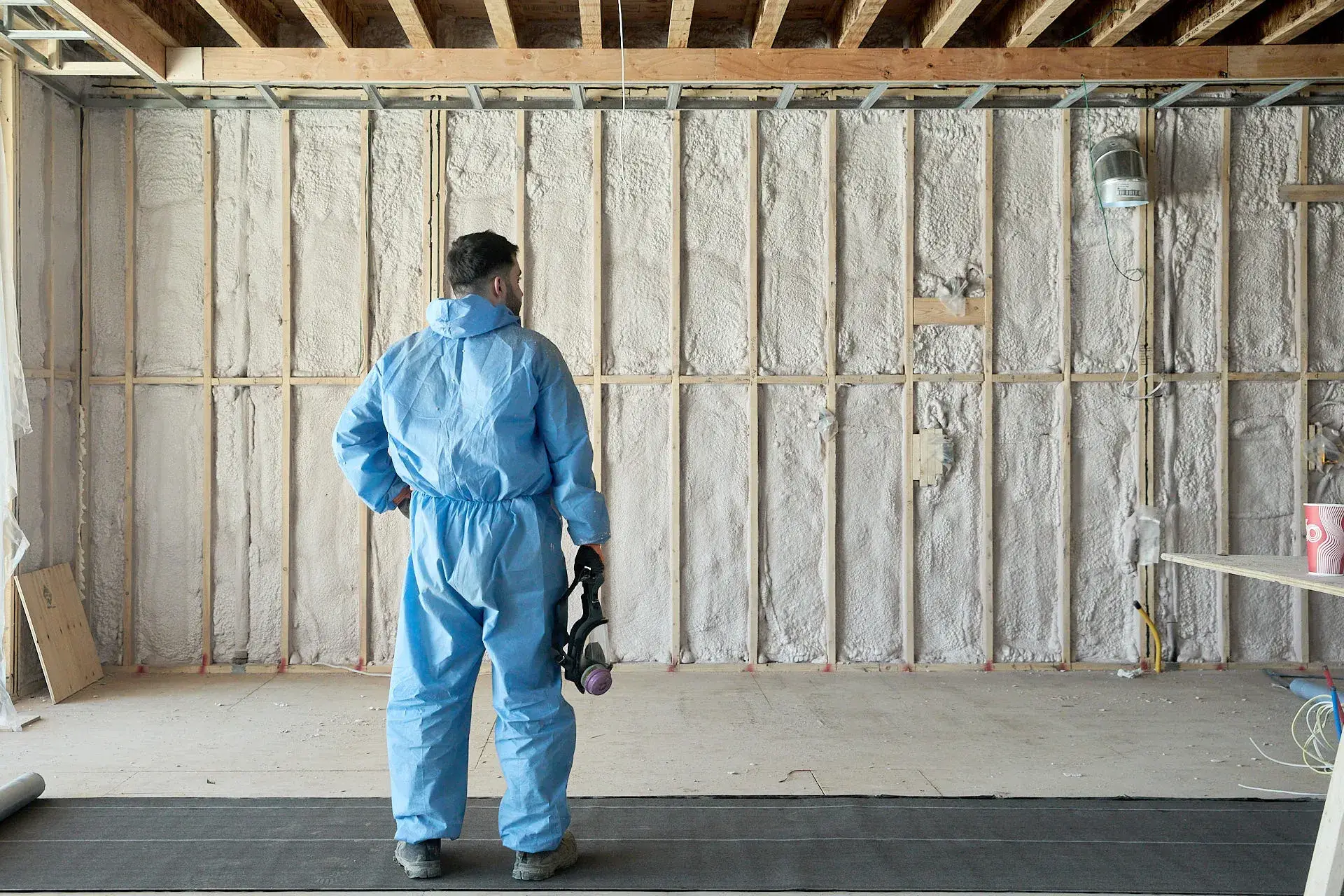
Closed-cell foam on the foundation walls and rim joist makes a basement unit genuinely livable — warm, dry, and cheaper to heat. Framing and stuffing batts against a foundation wall (the cheap way) risks moisture and mould behind the drywall, which in a rental is a liability you don’t want. Closed-cell foam → · Vapour barrier →
2. Sound between units — the complaint you can prevent
In any multi-tenant property — a duplex, a house with a basement unit, student housing with several bedrooms — noise between units and floors is the number-one livability complaint, and it directly affects whether tenants stay.
Closed-cell foam is the wrong tool for this (it’s rigid and transmits sound). For quiet between units you want acoustic mineral wool in the floors and shared walls, sometimes with resilient channel. Done during a renovation or unit conversion, it’s far cheaper than retrofitting later — and it removes a recurring source of tenant conflict. Safe and Sound acoustic insulation → · Open-cell foam → for interior partitions
3. The rim joist — cheap, high-impact, whole-building
The band of framing at the top of the foundation is a continuous air leak around the whole building. Sealing it with closed-cell foam warms the basement unit and the floor above at once. Small cost, building-wide benefit — exactly the kind of high-ROI item a landlord wants.
4. The attic — the biggest bill reducer
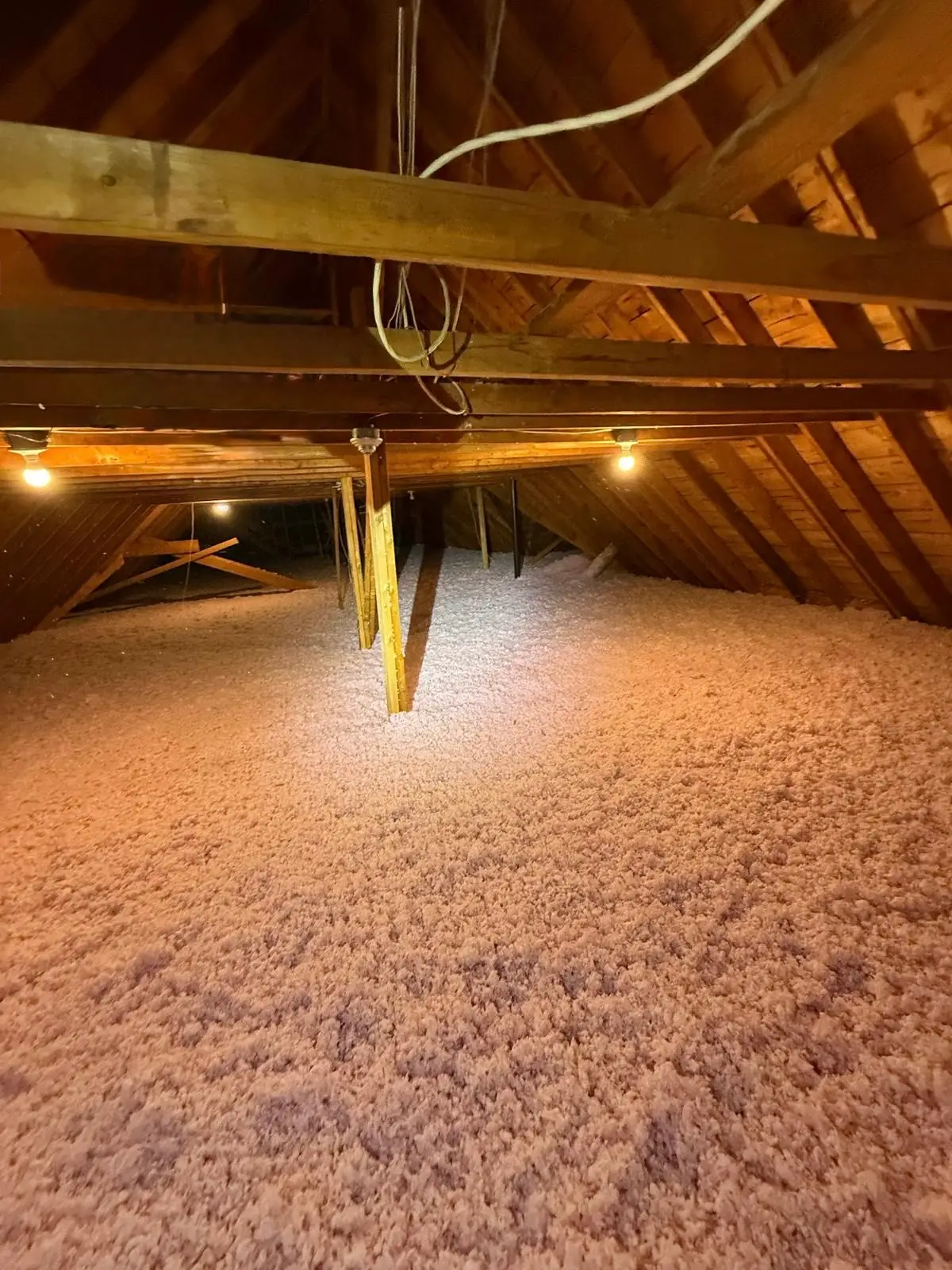
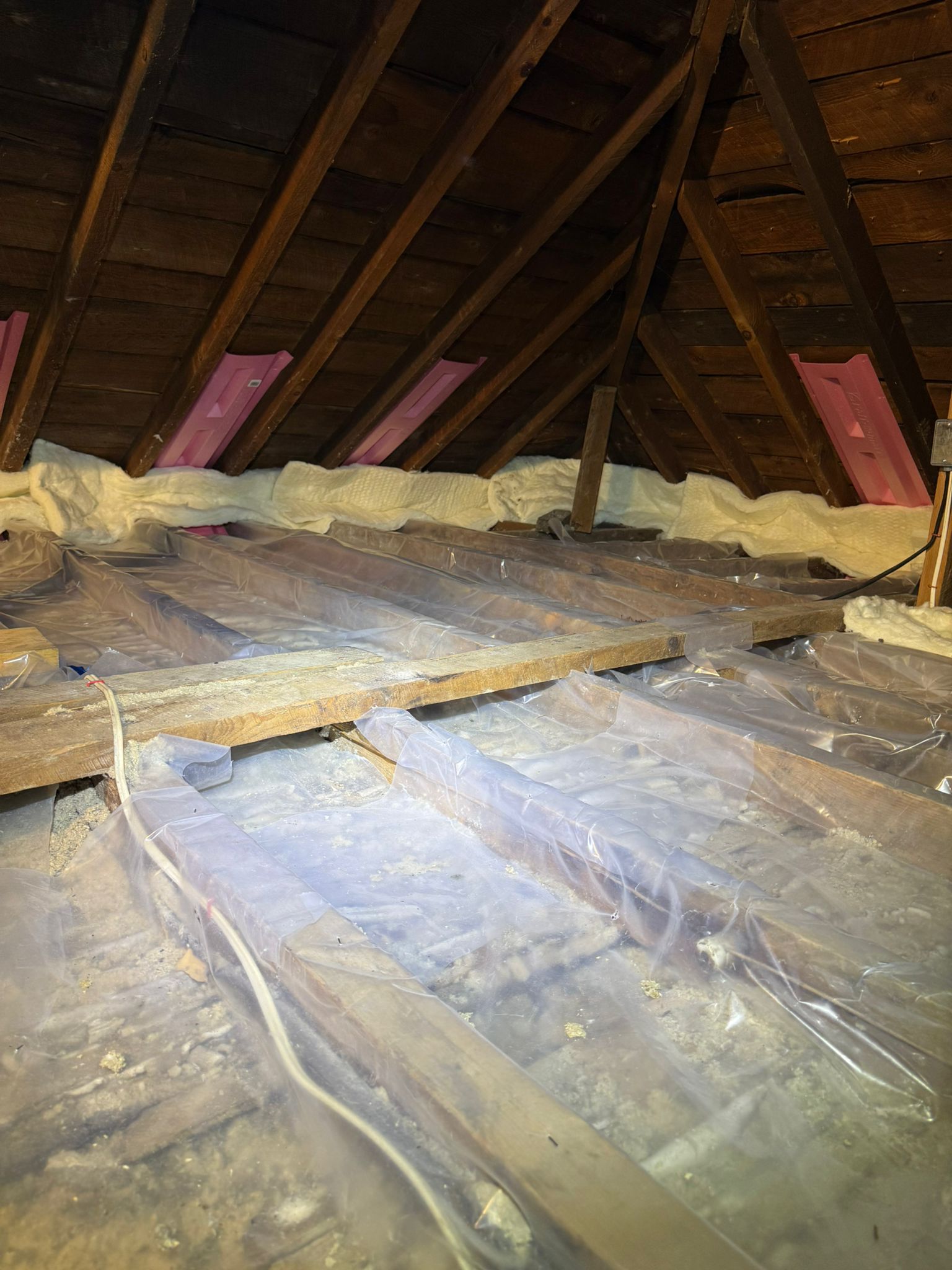
If you pay the heat, the attic is your single biggest lever on the winter bill. A standard truss attic is usually best served by cost-effective blown-in rather than foam — foam’s premium isn’t needed on an accessible attic floor. Attic insulation in Oshawa → covers this. The point for a landlord: don’t overspend on foam where blown-in delivers the savings.
5. The room over the garage, if it’s rented
If a converted space over the garage is part of the rental, it needs the garage ceiling foamed to be comfortable — same as any home. Garage ceiling insulation →
The investor’s rule: match the spend to the return
Being straight, because it’s your money and your margin:
Use foam where it’s necessary, blown-in where it’s sufficient. Foam earns its premium in the basement, rim joist, and moisture-prone or shallow assemblies. On a standard attic floor, blown-in gets the same heat savings for less. A contractor pushing foam for the whole property isn’t optimising your return.
Prioritise by who pays and what complains. If you pay utilities, chase the biggest energy savings first (attic, air sealing, basement). If tenants pay, chase comfort and noise (basement warmth, sound between units) — because those drive retention. Sequence the spend to your actual pain point.
Do the invisible, expensive-to-redo items during turnover. The gap between tenants — or during a renovation — is when the basement, rim joist and sound work is cheapest to do. Once a unit’s finished and occupied, it all gets more expensive and disruptive.
Practical questions
I have tenants in now. Can the work be done? Depends on the area. Attic and some basement work can often be done around occupancy; sound work in a shared floor is easiest during turnover or renovation. We’ll assess what’s practical with tenants in place.
Do tenants need to leave during spray foam? We install Insulthane Extreme by Elastochem and occupants can generally remain, but ventilation and re-entry timing for the sprayed area need to be planned — and with tenants, that coordination matters more. Flag any tenant respiratory sensitivities. We’ll work out the logistics.
Will insulation really cut my heating cost? In an under-insulated Oshawa rental — which describes a lot of the older stock — the difference is significant. The exact saving depends on the building and how it’s heated.
Can foam solve my noise complaints between units? Foam handles warmth and moisture, not sound. Mineral wool (and possibly resilient channel) in shared floors and walls is what quiets a multi-unit property. We do both.
Can I get a rebate as a landlord? This is the important one, and the answer is nuanced — the main rebate program is oriented to homeowners who own and occupy, and rental eligibility is restricted. It’s worth reading before you assume either way. Full breakdown for Oshawa owners and landlords →
⚠️ Program terms change — confirm at homerenovationsavings.ca.
Can you do insulation and drywall together? Yes — foam, sound, moisture and drywall on one job, which for a landlord means one trade, one schedule, one point of accountability during a turnover.
Get an investor-minded assessment
We’ll look at your Oshawa rental the way an owner should: where the money’s leaking, what’s driving complaints, which fixes pay back fastest, and where foam is worth it versus where blown-in does the job for less. Fixed price, in writing, matched to the return.
Pro Insulation Contracting has insulated Ontario homes for over 10 years and serves Oshawa and Durham Region.